
Fayetteville Child Support Lawyers
Fayetteville Child Support Lawyers
When parents separate or divorce, child support becomes one of the most important and emotionally charged issues. In Fayetteville and across Arkansas, child support ensures that children continue to receive financial care from both parents, regardless of living arrangements. The aim is to protect the child’s well-being and maintain a standard of living as close as possible to what they would have experienced if both parents had remained together.
Arkansas child support laws are designed to bring clarity and structure to this process, but calculating payments, modifying orders, and enforcing compliance can become legally complex. A strong understanding of Arkansas’s child support system is essential to protect your rights and ensure your child’s needs are met.
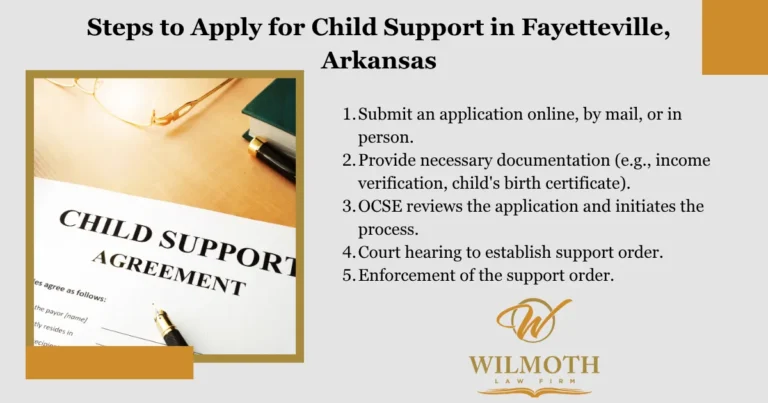
What Is Child Support Intended to Cover?
Child support primarily provides for a child’s basic needs: shelter, clothing, food, healthcare, and educational expenses. Depending on the parents’ financial situation, it may also cover childcare, extracurricular activities, or transportation. Courts aim to ensure children do not suffer economically due to their parents’ separation.
Arkansas courts strive to maintain the child’s standard of living post-separation, considering not only necessities but also what the child was accustomed to before the divorce. The Income Shares Model, adopted in 2020, calculates support based on what both parents would have contributed if they remained together.
How Is Child Support Calculated in Arkansas?
Arkansas follows an Income Shares Model, which calculates support by estimating family spending if parents lived together, then divides the responsibility between both parents based on their income.
The calculation uses:
- Gross monthly income of each parent.
- Number of children.
- Child’s health insurance and work-related childcare costs.
- Existing child support obligations.
The result is a presumptive amount, which courts may deviate from in justified situations, such as high parental income or a child’s special needs.
Can Child Support Be Modified?
Yes. Arkansas law permits modifications when circumstances significantly change. A review is allowed after three years, or sooner if either parent’s gross income changes by 20% (or $100 per month), or if a parent’s ability to provide health insurance changes.
To modify, a parent must formally petition the court and present financial documentation. Until the court approves a change, the existing support order remains enforceable.
What Happens if a Parent Fails to Pay?
Arkansas takes unpaid child support seriously. Enforcement tools include:
- Wage garnishment
- Interception of tax refunds
- Driver’s or professional license suspension
- Contempt of court, which may result in jail
The state’s Child Support Enforcement agency (OCSE) plays a key role in locating non-paying parents and ensuring payment compliance.
What if a Parent Is Self-Employed or Hiding Income?
If income is unclear—such as with self-employed parents—the court may impute income based on earning capacity, work history, lifestyle, or testimony. Financial evidence, like bank statements, tax returns, and business records, is critical to ensuring a fair calculation.
Do Both Parents Have Financial Obligations?
Yes. Both parents share responsibility under Arkansas law. Even if one parent has physical custody, both must contribute proportionally based on income. Child support is structured so that non-custodial and custodial parents each bear their fair share of the child’s expenses.
How Long Does Child Support Last?
Support generally continues until the child turns 18 or graduates from high school (up to 19). It may end earlier if the child becomes emancipated, marries, or enlists in the military. For children with disabilities, the support period may be extended, as determined by the court.
Can Parents Agree to a Different Support Amount?
Yes, parents can agree to terms that deviate from guidelines. However, any agreement must be court-approved to be enforceable. The court will reject agreements that appear unfair or coerced.
How Does Paternity Affect Child Support?
For unmarried parents, paternity must be legally established—either voluntarily or by court-ordered DNA testing—before support can be ordered. Once paternity is confirmed, child support, inheritance rights, and access to benefits (like Social Security) are activated.
Why Choose Wilmoth Law Firm for Fayetteville Child Support?
Child support is more than a financial obligation—it’s vital to a child’s stability and future. Whether you’re paying or receiving support, navigating Arkansas’s legal system requires legal help.
At Wilmoth Law Firm, we help clients with:
- Calculating accurate support under Arkansas guidelines.
- Filing or opposing support modifications.
- Enforcing existing support obligations.
- Addressing hidden income and other complex issues.
Our Fayetteville Child Support Lawyers at Wilmoth Law Firm Will Help You Today
Our goal is to deliver lasting solutions that protect your child’s well-being. Call 479-443-8080 or fill out our online form for a free consultation. Our Fayetteville child support lawyers at Wilmoth Law Firm are ready to help. Based in Fayetteville, we serve clients throughout Northwest Arkansas.
Our Practice Areas
Workers’ Compensation
Civil
Litigation