
Fayetteville Bankruptcy Lawyers
Fayetteville Bankruptcy Lawyers
Financial hardship can happen to anyone. Job loss, medical emergencies, divorce, or unexpected expenses can quickly turn manageable finances into overwhelming debt. For many individuals and families, bankruptcy offers a lawful way to regain control and move forward.
At Wilmoth Law Firm, our Fayetteville bankruptcy lawyers help clients throughout Washington County and Northwest Arkansas understand their debt relief options and make informed decisions about their financial future. We take the time to evaluate your situation, explain the process clearly, and guide you through each step with care and professionalism.
What Is Bankruptcy, and How Does It Work?
Bankruptcy is a federal legal process designed to help individuals and businesses either eliminate qualifying debts or repay them under court protection. For most individuals, bankruptcy falls into one of two categories: Chapter 7 or Chapter 13.
Chapter 7 bankruptcy is often referred to as liquidation bankruptcy. It allows eligible individuals to discharge most unsecured debts, such as credit cards and medical bills, usually within three to six months. While some non-exempt property may be sold, many filers keep all of their belongings because Arkansas and federal exemption laws protect essential assets.
Chapter 13 bankruptcy, sometimes called reorganization bankruptcy, allows individuals with steady income to keep their property while repaying debts through a court-approved plan lasting three to five years. This option is frequently used by homeowners who want to stop foreclosure and catch up on missed mortgage payments over time.
Our Fayetteville bankruptcy lawyers regularly help clients determine which chapter best fits their financial circumstances, goals, and long-term stability.
What the Bankruptcy Process Looks Like in Arkansas
Filing for bankruptcy involves several important steps, including:
Completing a required credit counseling course
Filing a bankruptcy petition with the U.S. Bankruptcy Court for the Western District of Arkansas
Submitting detailed financial disclosures
Attending a meeting of creditors
Completing any additional requirements before discharge
Once your case is filed, an automatic stay immediately goes into effect. This court order stops most collection efforts, including creditor phone calls, wage garnishments, lawsuits, repossessions, and foreclosure proceedings.
Our firm helps ensure that all documentation is accurate and complete from the outset, reducing delays and minimizing complications.
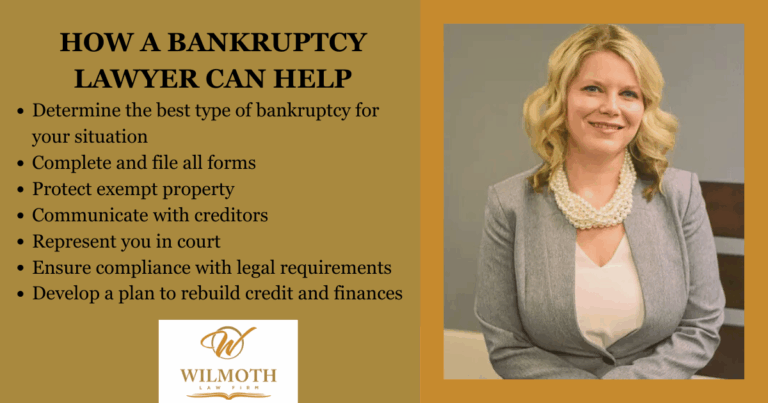
How a Fayetteville Bankruptcy Lawyer Can Help
Bankruptcy law is complex, and mistakes can be costly. Working with an experienced bankruptcy lawyer helps ensure that your rights are protected and that you receive the full benefit of the relief available under the law.
At Wilmoth Law Firm, we help clients by:
Evaluating whether bankruptcy is appropriate or if alternatives may exist
Determining eligibility for Chapter 7 or Chapter 13
Protecting exempt property under Arkansas or federal law
Preparing and filing all required paperwork
Communicating with trustees and creditors on your behalf
Our approach is practical and honest. If bankruptcy is not the best solution, we will explain why and discuss other potential options.
Chapter 7 vs. Chapter 13 Bankruptcy
Chapter 7 Bankruptcy
Chapter 7 is typically best suited for individuals with limited income and primarily unsecured debt. To qualify, you must pass a means test that compares your household income to the Arkansas median income established by federal guidelines.
Many clients are surprised to learn that they do not lose property when filing Chapter 7 because exemption laws often protect homes, vehicles, retirement accounts, and personal property
Chapter 13 Bankruptcy
Chapter 13 is designed for individuals with regular income who need time to repay debts. It allows filers to stop foreclosure, catch up on missed payments, and restructure certain debts while keeping their assets.
This option can be especially beneficial for homeowners and individuals who do not qualify for Chapter 7 due to income limits.
Is Bankruptcy the Right Choice for Me?
Bankruptcy may be a viable option if you are experiencing:
Persistent creditor harassment
Wage garnishment
Threatened foreclosure or repossession
Overwhelming credit card or medical debt
Difficulty meeting basic monthly obligations
Not all debts can be discharged. Student loans, child support, alimony, most tax debts, and debts arising from fraud are typically not eliminated. Bankruptcy will also impact your credit, remaining on your report for up to 10 years for Chapter 7 and seven years for Chapter 13.
Our Fayetteville bankruptcy lawyers conduct a thorough review of your financial picture to help you weigh the benefits and drawbacks before moving forward.
What Property Can I Keep in Bankruptcy?
Bankruptcy law allows you to protect certain property through exemptions. Arkansas residents may choose between state exemptions and federal exemptions, depending on which offers greater protection.
Arkansas exemptions may protect:
A homestead, subject to acreage and value limits
Personal property up to specified amounts
Retirement accounts and certain benefits
Tools of your trade
A portion of earned wages
Federal exemptions may protect:
Home equity
Vehicle equity
Household goods and furnishings
Jewelry and health aids
A wildcard exemption applicable to various assets
We help clients evaluate which exemption system best safeguards their property before filing.
How Bankruptcy Affects Your Credit
Filing for bankruptcy does affect your credit score, but for many individuals, it offers a faster path to recovery than continuing to struggle with unpaid debt.
While a bankruptcy filing remains on your credit report for several years, many clients begin rebuilding credit within one to two years by practicing responsible financial habits. In contrast, ongoing missed payments, collections, and judgments often cause more long-term damage.
How Long Does Bankruptcy Take?
Chapter 7 bankruptcy typically takes three to six months from filing to discharge.
Chapter 13 bankruptcy involves a repayment plan lasting three to five years, with discharge granted upon completion.
Delays can occur if additional documentation is required or if issues arise with creditor objections. Our firm works proactively to keep your case on track.
Our Experienced Fayetteville Bankruptcy Lawyers at Wilmoth Law Firm Can Pave Your Path to Financial Recovery
If you are struggling with overwhelming debt, you do not have to face these challenges alone. Our Fayetteville bankruptcy lawyers at Wilmoth Law Firm are ready to help you understand your options and develop a strategy for financial recovery. For a free consultation, submit our online form or call 479-443-8080. Located in Fayetteville, Arkansas, we serve clients in the surrounding areas.
Our Practice Areas
Workers’ Compensation
Civil
Litigation